
Quiet hours are the whole hybrid battery argument
A battery does not make a generator smaller by magic. It makes the generator switch off, and the hours it stays off are where the whole business case lives.
Hybrid power is sold on a percentage. Thirty percent less fuel, forty percent less carbon, pick a number. The numbers are usually achievable and almost never explained, which makes them easy to dismiss and easy to over promise. The mechanism underneath is simple enough to hold in your head.
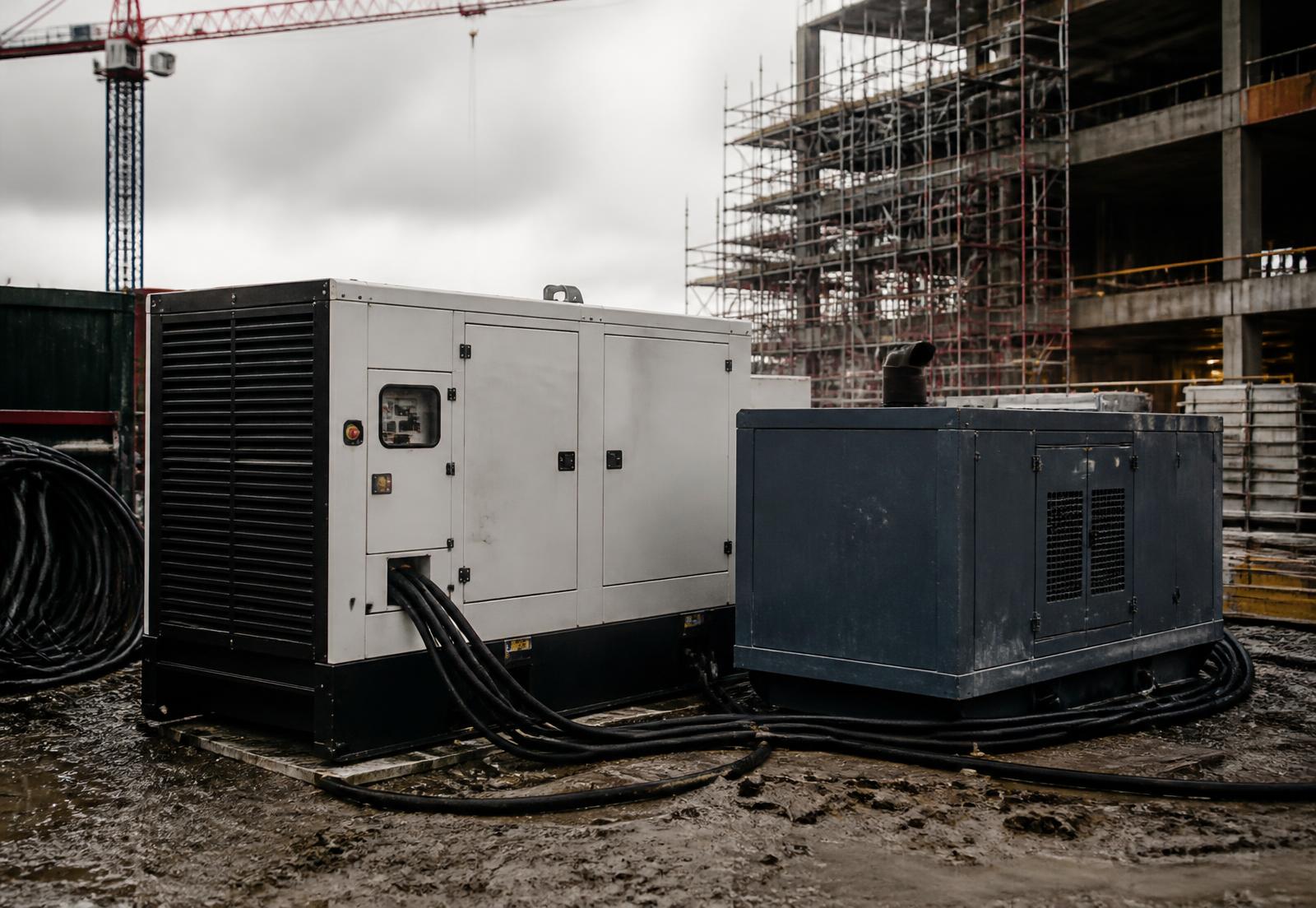
Overnight, a construction site is not drawing nothing. Cabin frost protection, CCTV, comms, a fridge and a couple of chargers might total three or four kilowatts. Put that against a 100 kVA set and you are running an engine at around four percent load for eight to twelve hours, every night, for the length of the programme. That is the most wasteful thing on the site, and it is invisible because nobody is there to see it.
What the battery is actually doing
A battery energy storage unit sits between the set and the site. It takes the base load itself and lets the generator stop. When the battery runs down, or when demand climbs past what it can hold, the set starts, runs at a sensible load, recharges the battery and shuts down again. Fewer running hours, higher average load, less fuel per useful unit of work.
You are not sizing a battery for the site. You are sizing it for the hours you want the engine silent.
That is why the quiet hours figure matters more than any other input. Eight quiet hours on a welfare compound is a normal night. Twelve is a long weekend shutdown. Twenty four is a location shoot or a residential street where a running engine is not acceptable at all. Each of those needs a different amount of stored energy, and the difference is not marginal.
Where hybrids disappoint
- /Base load estimated optimistically, so the battery empties before morning and the set starts anyway
- /Peak demand ignored, so the unit cannot carry the 7am surge and the saving evaporates at the exact moment anyone is watching
- /Generator hire assumed to disappear, when in practice the set stays on site as backup and still carries a rate
- /Savings quoted against a ten hour working day, when the fuel is burned across twenty four
The last one is the most common and the most damaging, because it produces a number that looks generous and then fails to arrive. If a report bases fuel on a working day, everything outside that day is free in the model and expensive in reality.
How to present the case
Clients and principal contractors are not hostile to hybrids, they are tired of being handed percentages without workings. A case that survives review usually contains four things: the assumed base load, the quiet hours it is claiming, the litres and cost with and without the battery over the real duration, and the hire cost of both arrangements side by side.
Show those four things and a hybrid sells itself on most jobs. Withhold them and even a genuinely good saving looks like marketing.
Try it on your next site
Sizr applies this thinking automatically on every job, and prints the assumptions alongside the answer.
Keep reading